Sometimes you really need to think through what you type into Google.
I was talking to my wife about a guy who failed a paternity test because his baby was actually born to his twin brother – who was still inside him. Searching for that article now, I found this:
This reminded me of Stephen King’s Dark Half – Tad Beaumont has an evil twin and…
OK, wait. This story is going to require me to be a bit spoilery. If you don’t want to have the story ruined, go and read it, and then come back and read this. Otherwise, read on.
So, when he was younger he started having visions of sparrows and heard them. It turned out he had a tumour in his head, which they removed. That tumour became his evil twin and tried to kill him when he brought it to life by creating an alter ego so he could write crime fiction.
Wow. That was MASSIVELY spoilery.
Shereen looked at me and said “Wow. That really would scare you, having an evil twin brought to life from being a writer.”
My response, in my best Arnie:
“It’s NOT a tumah! It’s my evil twin.”
Which led to:
“Ah! Twins! I have Danny De Vito in my head!”
Sometimes my mind works in mysterious ways.
I want to publish Finding Damo. I can’t publish it while I’m teaching. I can’t really write under a pseudonym, as everyone already associated me with Finding Damo (especially you, reading this blog).
So I’m safe for now, until I write something I have to publish under a different name.
Hello, my name is Damian Perry and I exist in 3D. My eventual goal is to have myself completely replicated in 3D and sit at home playing computer games while my avatar teaches my classes for me.
This happened because I was at the DigiCon conference and was chatting to Dr Michael Henderson from Monash University. He had a Structure Sensor attached to his iPad and kindly offered to scan me for the purposes of beginning my digital journey.
I have previously tried to turn myself into a computer model. But this is new and exciting and can be attached to an iPad!
A 3D scanned me.
I like new and exciting. I am head of Technology at St James and have plenty of scope to test out the new stuff that comes up at IT conferences. But 3D isn’t new any more. It’s here to stay and it simply pulses with opportunities for extending our students’ learning opportunities. And yet, it’s new enough that there is very little out there in the way of curriculum.
So I had to make my own.
This year, I started by focusing on getting my Year 8 students engaged and up to scratch with the technologies. We have a couple of 3D printers in the school We use Autodesk Maya in Year 1o for a Certificate II in Creative Industries through AIE. Maya will be installed on all of the computers by the end of the Year, but I still wanted something simpler for the Year 8 students. TinkerCAD was an easy choice. It is free. It’s backed up (now) by the power of Autodesk. It has extensive tutorials built in. And it runs purely from within an Internet browser (unless you want to use Explorer – but who does?).
So with the software chosen, I looked for something to print on it. 3D printing is about being able to work in the 3D space and translate that into a physical object. Using that within the Technologies and ICT frameworks, I also needed the boys to follow a process and solve a problem. Starting small, I challenged them to create the following:
A container – this needed to be hinged or otherwise able to open and close.
A game piece – recreating a real game piece or creating something new for a made up game.
Something bigger than 15x15x15cm – this is the footprint we had to deal with. There are plenty of ways to extend this, through joints and clips and pegs and such.
Something that moves – gears, wheels, springs. They had to try and create something that would do something.
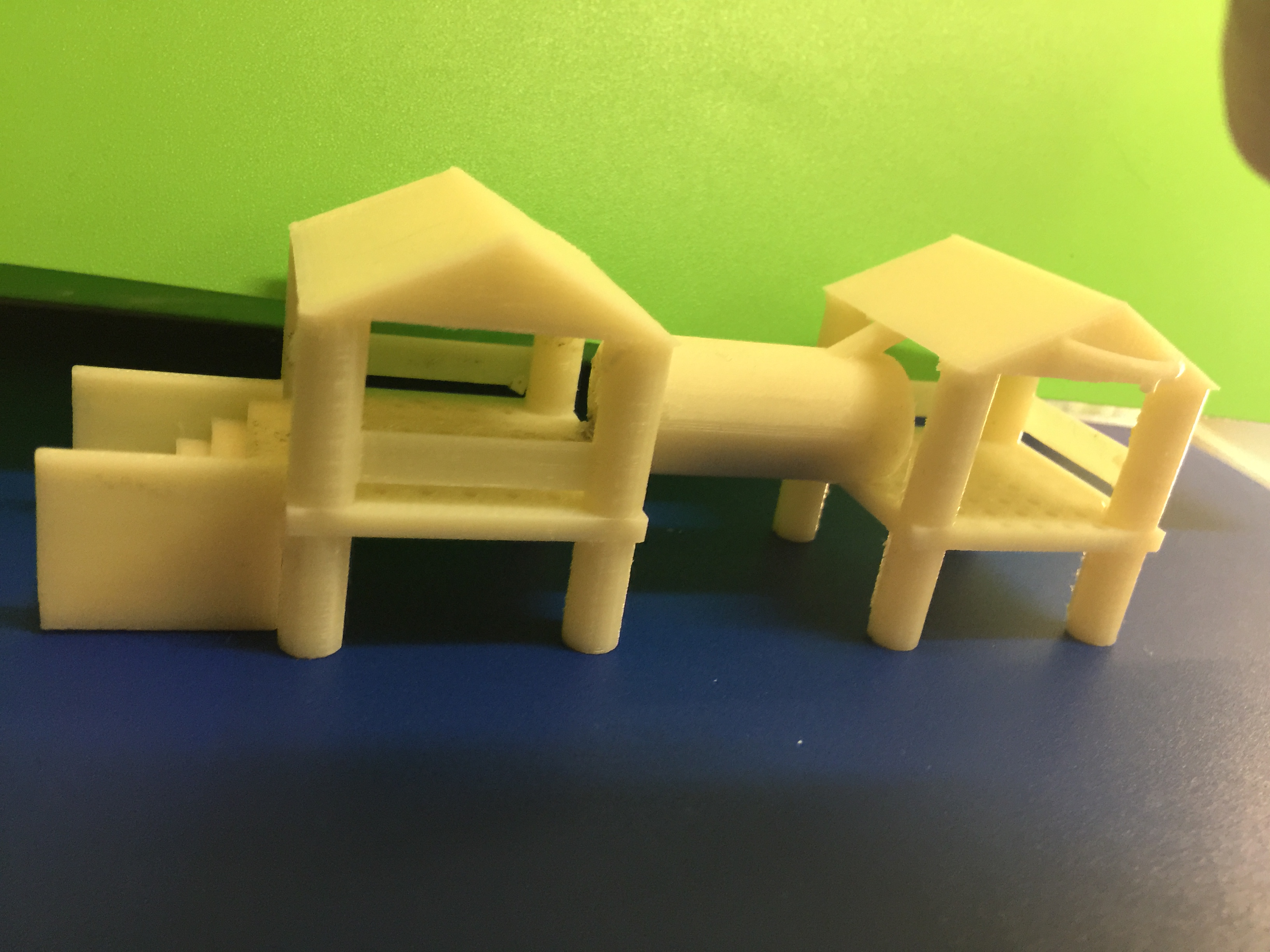
To finish off, I borrowed (stole) an excellent idea from Kilvington Grammar. At last year’s DLTV conference, they presented the idea of having the students create a play park. They had to research parks, environmental issues, flow through within the park and materials that could be used. And then they would plan the entire park in a group and design and print one piece each to put the park together.
Jurassic Play Park
This worked really well in the first semester this year. The boys were engaged. I had them come up with their own assessment criteria and promoted self-and-peer marking. They decided that complexity, originality, aesthetics and practicality were the most important attributes for a model.
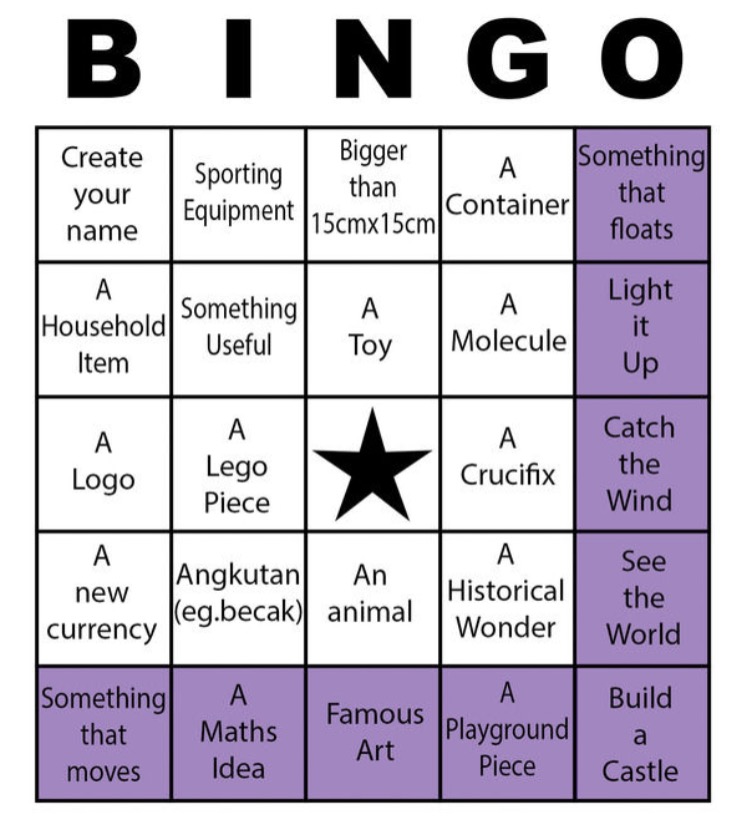
But we were still only barely breaching the surface of the 3D printing mine of ideas. In this, our second semester of 3D design in Year 8, I decided to expand the possibilities, and created 3D Bingo.
My students have to complete a line of the grid to complete this unit. They can go sideways, up and down or diagonally. They’ll create four models from the white section and one purple. I don’t expect a lot of research from the models in the white grid, although they obviously could be used in that way. My students use these options to hone their skills and work towards the purple square. The star in the centre can be used as a wild card – they can choose any other square to complete, even if it isn’t on their chosen line. I have chosen pieces that cross most of the curriculum areas in the school to give other teachers some ideas as to how the printers can be used in their learning areas.
And then the boys need to complete their purple square.
Exploring Maths in 3D
This is the Major Project square. This is the “research and present” part of the assessment. Fingers crossed, but this should be where the boys explore a concept and THEN make the model.
The four squares on the right come from a challenge by Thingiverse. Those along the bottom come from my brain, apart from the previously mentioned Playground Piece. The students will research the idea, look at possible solutions, present their research and then create and evaluate the model.
And STILL we are only touching the surface of the possibilities. 3D printing companies are starting to get on board, creating curriculums based around their specific printer, but focusing on 3D printing in general, rapid prototyping, materials and research as well as practical exercises. There are games and activities that can be wrapped around the 3D concepts.
The conversations that came out of DigiCon15 were numerous, but some of the more pervasive ideas were:
Getting schools to pay for the technology
Getting learning areas other than IT to use the technology
Costs of consumables and
Being on board with another possible flash-in-the-pan fad.
First up, I bought our first 3D printer – an Up Mini – for $600. Less than the cost of a good laser printer. I used the roll of materials that came with the printer for the rest of the year without running out. I worked out that most of my prints would cost about $2. Money shouldn’t be a concern when offset against the possibilities for enhanced learning.
If buying the printer is still an issue, consider pooling your resources with other schools in the area. I know that our printers aren’t running 24/7. Maybe look into a partnership with the local libraries or community centre. Public makerspaces are becoming more common and are a viable alternative to buying your own printer.
Why not 3D print your frog?
Secondly, I was chatting with the woodwork teacher, who had just helped a student put together a cabinet for his mother. The overall cost for the project in materials was about $60. This is perfectly fine and expected in a practical subject involving specific knowledge. Science pracs involving frogs and rat cadavers and other materials all cost. Art supplies are consumed at a remarkable rate. And don’t even get me started on photocopying costs.
The solution to having the technology used by other learning areas was to not have it hidden in the IT labs, but located in a central “making space” that is visible and accessible to all learning areas. It is an excellent way to promote the school during tours and it takes away from teachers needing to ask the IT person for access or permission, needed or not.
Finally, there is no doubt that this technology will change and grow over the next few years. I’m absolutely sure that my state-of-the-art printer will be obsolete before I’ve gotten my money’s worth. But the concepts – the ideas behind this technology – they are here to stay. And I’m sure that my boys will make their way into the future with skills that they will absolutely use in our 3D printed world.
Now, if you’ll excuse me, I have to go back to creating the voice sync software to allow me to teach from home in my pajamas.
Some Resources
Printers
UP! – A number of very clever, cost-effective machines. Used at a number of schools and well within the budget of even the home hobbyist.
Stratasys – Our Mojo produces some gorgeous prints. Definitely not a hobbyist machine, but takes 3D modelling to the next level.
MakerBot – One of the big players in 3D printing aimed at the low end and upwards.
Twitter is a marvellous beast. We can only go to one session in every slot during a conference, but thanks to Twitter (and the teachers using it) I have resources from dozens of sessions that I couldn’t make.
Over the two days, we discussed a number of technology issues and heard from some very clever and entertaining educators. I’m going to philosophise about a few things and post some links about the things we found out as I try to unpack all of the information shoved willy nilly into my brain. Please feel free to add to/dispute any of the information I place on here. And enjoy.
First up, something I picked up from my first VITTA conference: Storify. I typed digicon15 into the search bar, pressed SHOW MORE about a hundred times and then stuck all 2000 tweets into a storify article. From that point, I could start to order what happened over the two days and create:
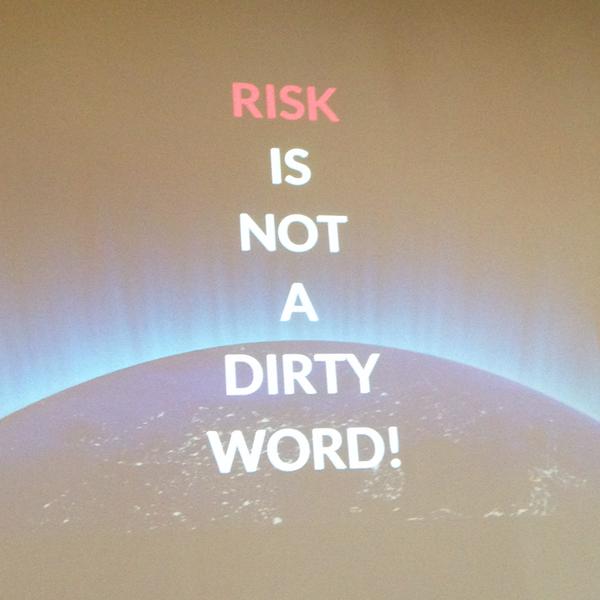
Teachers in general are a risk-averse bunch. And fair enough – we are providing a product to parents and we are accountable for our stuff-ups to a number of different groups. However, technological innovation is all about risk taking. And surprisingly, people rarely die from taking risks in this arena. So go for it.
Similarly, we are scared of letting our students take risks. But we need to relax and let them free. Just make sure you’re a member of the union first. Wrapping your students in bubble wrap means that they are ill-equipped to deal with the outside world.
Don’t tell your kids “Be risk takers!” and then “…but don’t do this because you might get hurt!” Schools have too many rules. Set them free. If they fail, if they get hurt, they’ve learned something and will do better next time.
On the subject of failure, Anne Edmonds performed for us. She’s a very funny comedian and she extolled the virtues of failure as a learning device. Risk and failure = success (eventually). But only if you learn from your failures and don’t let them beat you down.
Hamish Curry played games for us, ate a banana on stage and was from that point on part of #bananagate, which I still don’t completely understand. During his keynote, the sales of Duet, Paper Fox and Monument Valley shot through the roof.
When you’re planning lessons, Corrie Barclay (@CorrieB) introduced us to the 3 Russian Brothers and their cousin:
Morov, Lessov, Ridov and Tossin.
What do you do that works that you can do more of (Morov)?
What do you need to do less of (Lessov)?
What do you need to completely get rid of (Ridof)?
What else can you toss in (Tossin)?
He made some excellent points about authentic assessment and enquiry learning. His Doomsday website shows what students can come up with when they aren’t limited by teacher expectations.
The philosophy of being a teacher came up over and over. One of the better quotes that popped up on the screen during keynotes and Spark events was: There is no such a thing as a teacher or a student; there are only co-learners. Especially in IT, we learn as much from our students as we teach them, and the successful teacher is the one that is willing to take the new on board and have a student explain it.
As for the venue, Swinburne is a great place to hold a conference. The wi-fi was flawless, which is usually where these days fall down. The food was delicious and plentiful. Winthrop provided us with free “real” coffee for the two days. And apart from getting up way too early on a Saturday morning, the public transport was a doddle.
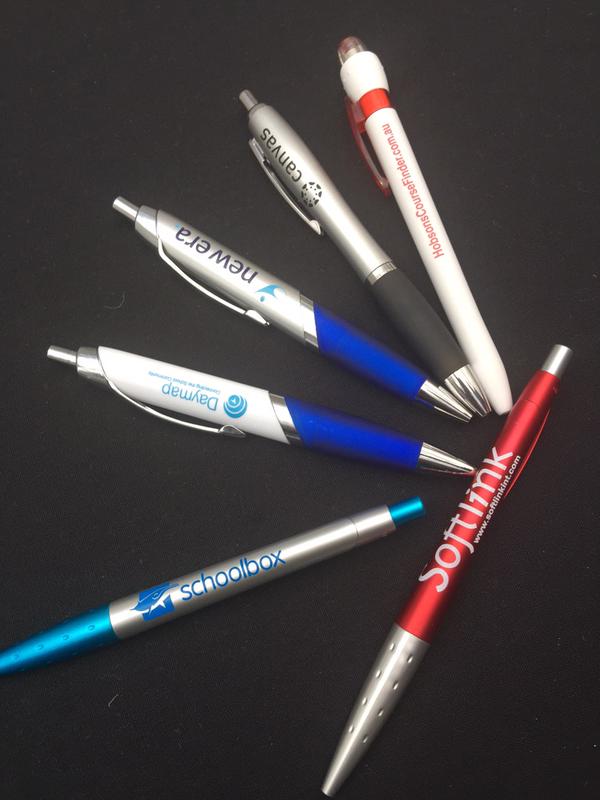
And I reinvigorated my company pen collection:
Specifics
ICT v Digital Technologies
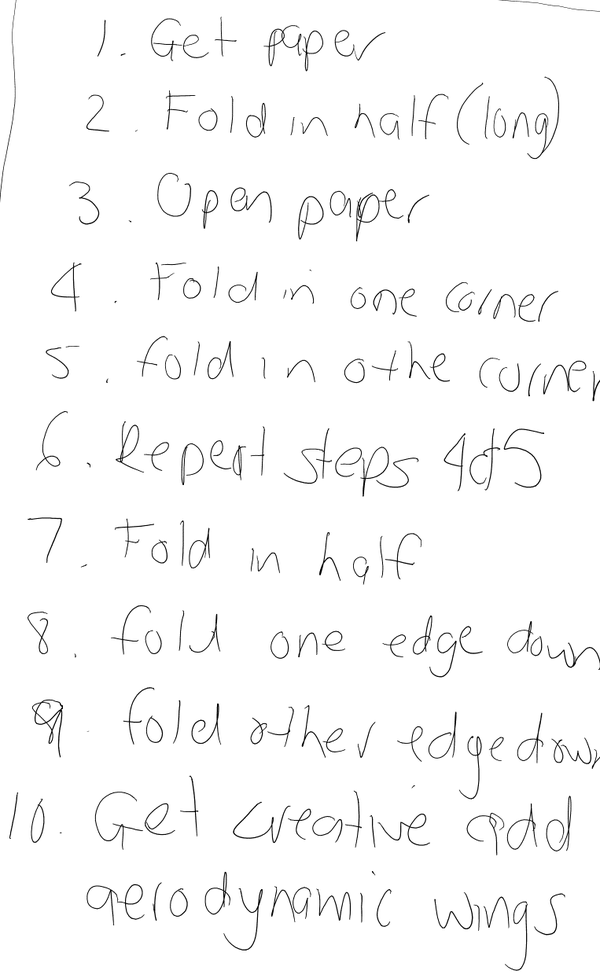
My instructions
Digital Technologies = Producer. ICT = Consumer
In one of our sessions, we made the distinction between DigiTech and ICT by making paper planes. I had to make a plane, write down the instructions, post the instructions to Twitter. Then I found instructions from someone else and followed their instructions to make a plane myself. Digital Technologies involves the creation of a product. ICT involves using a product that someone else has created. This activity allowed us to do both.
Implementing Digital Technologies presents the age-old problem of where to stick it. Do we create a separate Digi-Tech class at a year level? Or do we break it up and stick it into a number of different classes?
The instructions I had to follow.
Technological Innovation
I attended a session about getting students out of school using technology. The idea is that one a couple of days each year, or semester, whatever the school is comfortable with, the students stay home from school and the teachers present classes digitally. There are a great number of reasons why this would be a good idea. Just as many reasons not to do it, especially in our risk-averse teaching society. But it’s an interesting concept.
This was a daunting task for a number of teachers, but through collegiality, a bit of courage and a good implementation plan, the program worked – and continues to work – well.
I’m not saying that we should all send our students home for the day twice a year – I think our parents specifically would have a kitten over the idea – but there is definitely merit in using a collegiate approach to upskilling the teachers in our schools and getting them to embrace technology. Maybe a Digital Day twice a year where students take classes digitally at school. Something to think about.
Coding
I didn’t make it to any of the coding sessions, but I got a great deal of feedback from the other teachers from my school, as well as a friend of mine and of course the multitudes of Tweets.
Some of the better results:
Coding = repetitive failing until you get something that works. – @rissL
Programming, or “coding”, is simply making a list of instructions and having them executed.
I saw someone “coding” a human being. This sounds like a great introduction to the concept.
3D
A 3D scanned me.
The 3D offerings at DigiCon15 were phenomenal. The ideas I saw put forward will completely change the way I run the curriculum next year. There’s too much to go into here, so I’ll put up a separate blog post on the subject (and link to it when I’m done).
Questions without answers
How can we shape lesson and curriculum design that keeps us as teachers engaged, creative and innovative? – @CorrieB
So many benefits for teaching students the Arts. How can we make schools value this more? – @wongmichy
This is my games folder. It goes on a bit. This is my work iPad. I don’t see a problem with having a games folder on my work iPad. Of course, I’m an adult rather than a teenager with all of the impulse control of Winnie the Pooh at the Barnes Honey factory.
But games in themselves aren’t the problem. Time management is the problem. There have been times, dark times, when I was ruled by the little red badge on the games icon. Or on the Facebook icon. The little red badge and the drop down notification bar were my masters and I pandered to their every will. ALL HAIL THE MIGHTY RED BADGE!
I’m better now.
We are humans. We are not ruled by the robots. That is still coming. For now, we are the ones that should be in charge of the little “smart” phones and other devices we own, not the other way around. To that end, I say:
Take charge! Invade their homes, find the evil time-suckers and kill them and their smug little red, round, everlasting requests for attention.
No, I don’t mean your kids. I mean that there are very few apps on your device that have a legitimate claim to your immediate attention. The rest can wait until you choose to open them and have a look.
Do this, if you are in possession of an iDevice:
Go to Settings. Click on Notifications
Choose a particularly annoying app.
Strip it of all of its power.
Honestly, on your iPad, you might need to know when someone has sent you a Mail. You possibly have a valid reason for knowing that someone has sent you an iMessage. Beyond that, the iPad needs to get its grubby mitts off your life.
It’s time. Time to take back your life. Throw off the red circles of iPad oppression! Break the bars of Banners. Tell Homer Simpson and the Smurfs to get back in their boxes. You’ll get to them when you’re good and ready.
Your homework: go through your apps list in the Notification Center. Decide, with all seriousness, how many of these apps need notifications. And turn as many of them off as you possibly can.
I’m writing reports. I’m too tired to go and find all of the tired tropes teachers traipse out every time they talk about differentiation.
Wow, massive alliteration bomb right there.
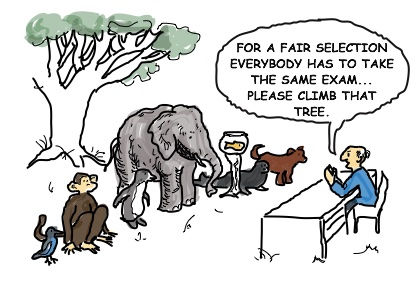
Einstein and his tree-climbing exam comes to mind immediately.
The focus for our school in the upcoming years is differentiation, and the first goal is to explore the concept and see what comes out of the dialogue. I’ll dialogue later. I’ll monologue now.
Like an evil villain. Mwahahhahahahahahaha!
See? Tired.
And I worry that, if I create a different lesson plan for each and every one of my students, and then have to mark each one differently to allow for their special abilities, that I’ll be a lot more tired later. Of course, if I spent more time marking work and less time writing blog posts, I might be less tired. But, what can you do?
Here are some thinking points:
Most schools do a great deal to try and raise the grades of students on the left hand side of the bell curve.
What are schools doing to extend those students at the upper end of the scale?
Bored geniuses are… genii? Grant me wishes? I’ll look it up. Bored geniuses (obviously not me) are often discipline problems. They tune out because the work isn’t challenging, or isn’t relevant.
Extending the high achievers definitely involves more work for teachers and will be a bone of contention in planning meetings, even if nobody says anything out loud.
A lot of current educational methods are being made redundant by new technologies.
I’m not offering solutions just yet, just offering points to think about.
If you’re making students answer questions from a text book, differentiation will be difficult. Luckily, this isn’t such a prolific practice as it was when I was younger.
OK. Enough rambling. What are the solutions?
First up, look at the questions you are posing in your assignments. Are you asking students to do something that they can cut and paste from Google?
“What were some of the effects of World War 2 on the world economy?” can be typed into your favourite search engine verbatim, and students can pick and choose a variety of answers to submit as their own. There is no reason to extend myself as a student. My answers might be better than the lower kids’, but I don’t have the motivation.
Essays such as this should be put to rest. Anything that can be Googled needs to be removed from the curriculum. Try this: “Create a radio news broadcast from a specific day in 1946. Include local and world news, sports, business and weather reports”
They can Google the information but they still need to use it in an original way. You’ll have already taught them about how to be web-search literate, finding accurate and relevant information from authoritative sources. They’ll rationalise their choice of information in their updated bibliography.
They can be assessed on ICT knowledge, History knowledge, speaking and listening in English and hopefully group work.
Secondly, create tiered assignments based on your knowledge of the students. Each tier should have opportunity to stretch themselves, allowing the teacher to move them up for the next work task.
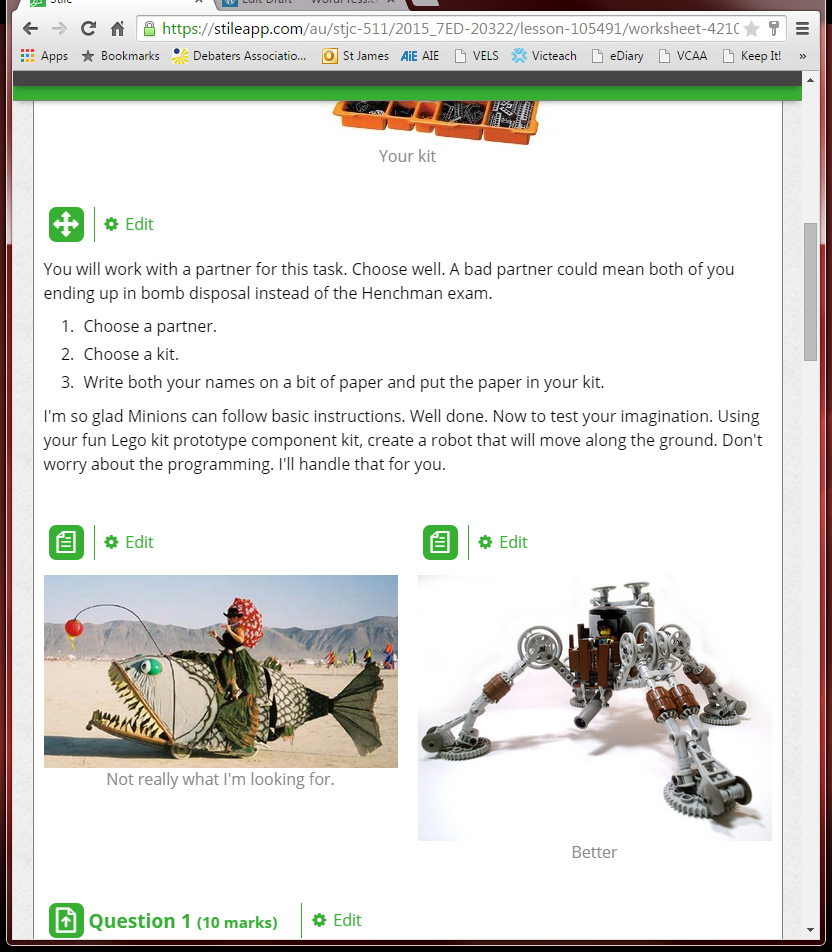
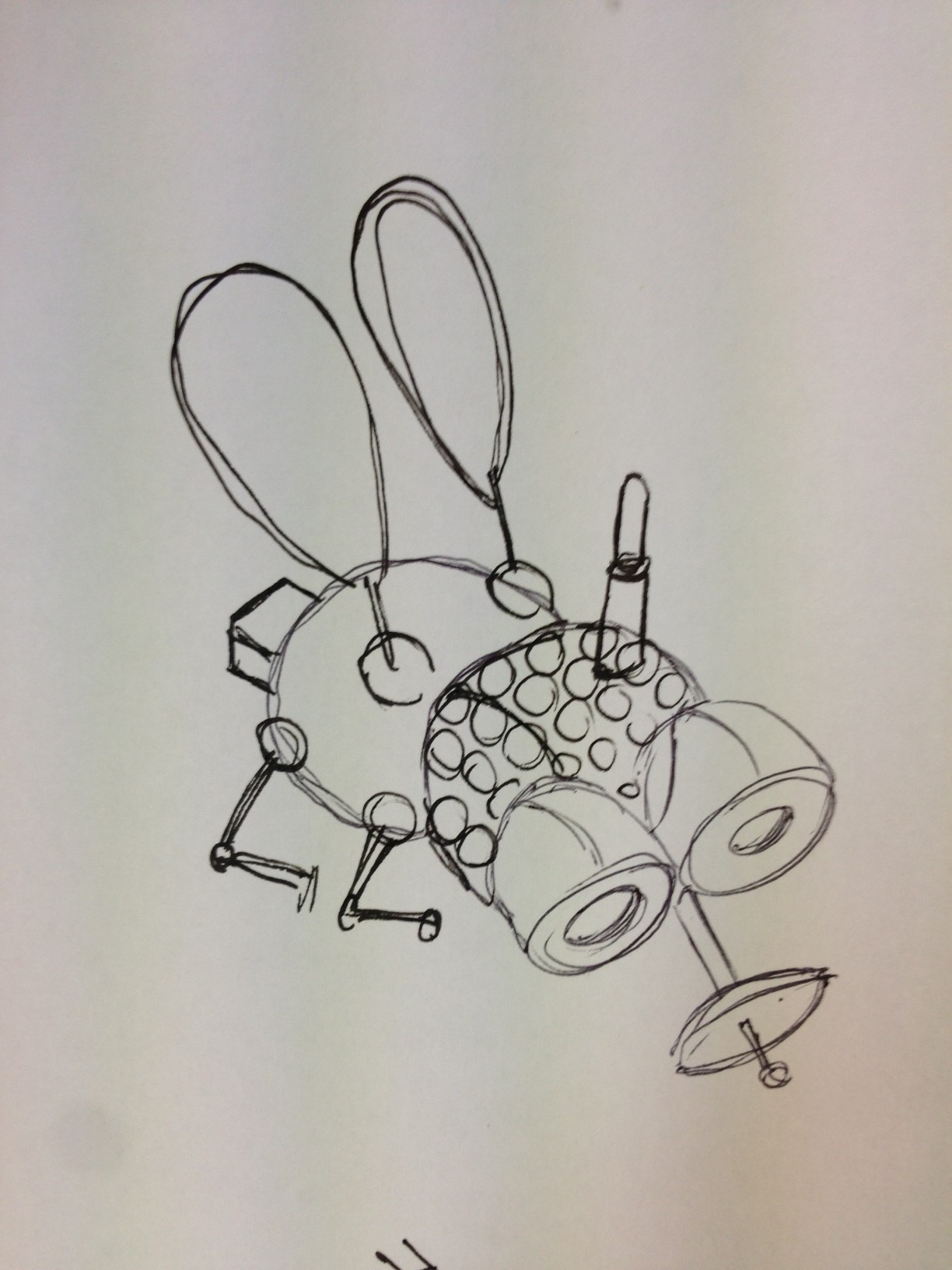
My Engineering and Design class is called The Evil League of Evil. Students start off as Minions, and work towards becoming SuperVillains. The first tasks have them following instructions and showing me that they can gather evidence. It also allows for a variety of responses, allowing those with higher skills to show this. The boys create Lego robots, designing and planning before creating, and finally evaluating their own and others’ creations.
The second task is split into three. They can Build a Robot – if they still need more help – using instructions and continuing to record evidence. They can Design a Robot – Henchman level work that gives them some autonomy but still working on a task I’ve set them. Or they can Invent a Robot – the Villain level work which lets them create a bot from scratch with no intervention from me.
From there, I can shift boys up and down the ranks, depending on how they respond to challenges. They know where they are at all times, and have the impetus to try and reach that highest level.
And of course, we finish the semester with an all in Robot Battle Royale, for those who have achieved a high enough level. Once reports are done. To keep them going for the last two weeks. There are prizes. It’s great.
I know people are thinking “But yeah, practical subjects like that lend themselves to differentiation! And think of all the extra work you just did!”
First up, I’m using Stile, which I love. It allowed me to simply copy the activities into different classes, and I could simplify the language for the minions and add a couple of bonus activities for the Villains. So, not so much extra work.
Secondly… Well, sure, you might have a point. Differentiation is easy in practical subjects. But I can come up with dozens of ways to differentiate an English or History lesson off the top of my head.
Leading to my final point in this mad ramble. One that I’m sure you’ve heard from me before: Collaboration. Nobody should have to do all of this work alone. I have a great team working with me in Technology, so assigning tasks and year levels is easy and the results are fantastic. Use your team. Have a regular spot in the morning briefing, in every staff meeting. Have one staff member share a success story in differentiation. It doesn’t have to be subject neutral. But it could give the rest of the staff that spark that lets them do the same in their classes.
I want to go into depth here. I’ve been working with differentiation for over 10 years. But I also want to keep this under 1000 words (or one picture). So I’ll stop and add more later.
Just a quick one today. I need to get a couple of things into your head. Let me know how long it takes to get them out again.
1. Numb.
It has ruined my reading life. Every time I hear the word numb or read it, my brain immediately goes num num num num like a baby gumming a watermelon. Jim Butcher uses the word numb a lot in the Dresden Files.
So now, in a tense moment, Harry Dresden’s arm goes numb and my brain goes num num num num and I lose the plot completely.
Now you can too. Don’t thank me all at once.
2. albatraoz.
This was the last thing I heard at the gym this morning. And now it’s flapping around the inside of my head like an… well, like an albatross. Bumping into things. It’s cruel to keep such a big bird in such a tiny brain.
Wait.
Anyway, just thought I’d share the torture. What’s your go-to song in the Ear Worm game? And do you have a shield? My wife and I swear by the Smurfs. It instantly removes any other song from your brain, but doesn’t hold on too strong.
There are hundreds of ways to annoy a teacher. Sometimes it depends on whether the annoying person is another teacher, an administrator, a reporter, parent, relative or person on the street.
My uncles delight in telling me that I can’t complain because I have too many holidays. I could argue that until the cows come home and it wouldn’t make a difference, so I won’t bother.
I get annoyed when meetings are called (or cancelled) at the last minute. I get annoyed when I don’t see a class for three weeks due to unfortunate timing of holidays and sports days and correction days and any other multitude of days. But it’s something that happens. I’ll live.
I was unnecessarily infuriated when another teacher told me that one of the extra-curricular activities I undertake was part of my teaching load. OK, annoyance again was warranted but the strength of my reaction was a bit over the top.
If you’re not a teacher, or not a secondary teacher, here’s some background knowledge. Primary teachers all over the country will look at what I’m about to say and join my uncles in telling me secondary teachers are paid too much, but here goes.
We have a teaching load. Looking at my timetable I have 19 periods of teaching a week which is 15 contact hours (I think). I have five yard duties and two emergency yard duties over a fortnight. I have a couple of possible extras a week. I have time allocation for my Position of Leadership, and a couple more for IT-related work. The rest of the time we’re at work is planning, marking and other teaching miscellany. I totally admire the primary teacher who has their classes all day, except for specialist times.
We also have responsibilities. We have to show up to meetings – staff meetings, beginning and end of term training days. We have to attend some information nights and we are expected to participate in certain extra-curricular activities related to our discipline. For example, I am part of the Arts faculty, and therefore I take part in the College production. More to the point, I love the College production and therefore I take part in it (but I would be expected to do so even if I didn’t).
I teach at a smallish school. We have a dedicated staff and we’re never short-handed for any activities that are run. Because we like to get involved. Because we like to do things to enhance our students’ learning experience.
Not because we’re being paid to do it. Not because it’s part of our job description.
I’m not getting paid any more than the teacher who gets in at 9 and leaves at 3.30. This morning I started work at 6.45am and I’ll finish at around 11pm.
It’s not part of my load. And it devalues what I choose to do to say that it’s part of my job description. It took me awhile to figure out why I was so angry at the suggestion, but there it is.
This next bit will sound a bit more like a resume letter than a blog post, but I think it’s important to blow your own trumpet every now and then. Not for other teachers, who already know how much work is involved in what we do, but for my uncles.
Here’s the short list of my extra-curricular involvement at the school:
Debating coach (five evenings, plus finals, plus lunchtime planning sessions, plus research and planning, plus professional development and the associated catchup)
Creative writing club (lunchtime meetings, plus excursions, plus research into competitions and publishing opportunities, plus proofreading and lesson plans – purely for the boys’ enjoyment and not part of school, plus Write-a-book-in-a-day (8am-8pm))
College radio before school at the community radio station (getting up before 6 for a 7-8am show, once every three weeks)
College production (don’t even ask, especially on years where I have a more active role)
Not paid for any of it. And apart from the College Production, not even expected to do any of it.
And I really don’t care. I love doing it all. I love being a part of these activities and I don’t begrudge the time spent making them work well (although my wife might sometimes).
But I want to be a bit selfish. I want people to look at what I’ve done and say “look at what he’s done for these kids – that’s pretty special” rather than “meh. It’s part of his job.”
OK, rant over. I just wanted to work my way through an extreme reaction to a simple comment.
And now, back to work. Playing with Lego, making movies, creating robotic animations, printing out 3D Pokéballs and taking photos.
I’ve got the theme song going through my head right now. And now you do too. Ha! Ear worm.
My lovely wife and I went to a wedding on the weekend. As I get older and more introverted, I find myself dreading weddings. You know the deal: turn up, hang about near the church making small talk, sit through a ceremony, hang around for ages until the reception and hope to God that you’ve been placed on a table with either someone you know or someone interesting.
This wedding was an absolute delight. The bride and bride were lovely, the rain miraculously held off for the outdoor ceremony. And we were there with a bunch of people who were incredibly easy and fun to chat with. These were friends of Shereen’s, through our daughter’s last school, so she doesn’t see them as often as she used to, and I rarely see them at all. But the conversation was easy and stimulating. We laughed a lot and chatted over a number of different topics.
Which is lovely, but not my point (when is my opening ramble ever on topic?).
Shereen met these people because her daughter went to the same school as their kids.
Now, there’s a bit of a cultural crossover here, in that they lived in a similar area and sent their kids to the same school, so they would have some common interests and values. And of course, Shereen isn’t friends with all of the parents at the school, so that limits it even further. But I found it interesting that they became and remained friends through that limited commonality.
And that probably says more about me than anything else.
I don’t make friends easily. I have lots of people that I like and hang out with. Lots of people that I call friends, and if you want to go by Facebook, hundreds of friends that I don’t even hang out with. But the people that really matter to me – those that are an extension of my family in a lot of ways – are few.
I have those that I met through family as a child. A few from high school. A few more from my first university degree. Some from my second stint at Latrobe. A small select group that I met through other friends. A tiny smidge of people that I am friends with because of my jobs. Oh, and some Pratchett people.
That’s actually not a bad number, once I go through it in my head.
I think I have eight people who would help me bury a body. One of those is my wife, and she’s only up for it under certain circumstances. One isn’t as good a friend but would just be up for burying a body. That leaves six friends in the body burying category. Of those, two wouldn’t judge and the other six might need a bit more explanation.
I’m not counting family here, because being family means being willing to drive out into the forest and bury a body. You can choose your friends, but you can’t choose your psychopathic relatives.
Why are we friends? What happened that meant that we got to a point where I could show up in the middle of the night with a canvas wrap and a shovel? It’s not just because they like Red Dwarf and Star Trek. It can’t be just that we’ve spent x amount of time stuck in the same place together. I’m pretty sure it’s not just teachers and computer programmers.
I think that there are certain shared experiences that just cement a friendship.
Burning a Chucky doll is one of those. I have an event on Facebook at the moment for a reunion of The Five. 20 years ago, we sacrificed a Chucky to relieve exam stress and to save one of the Five from nightmares. This is a post in its own right. I can’t believe I haven’t done that one yet. Stay tuned. Anyway, we were all close friends before that point, but even if we hadn’t been, I’m pretty sure we would have cemented the friendship with that experience.
My friend Melanie is such a good friend because we were born within months of each other and then spent the next 20 years with our parents getting together regularly. Somewhere along the line we found a friendship that I didn’t maintain with the other two in our little ’74 babies club. We played tennis at New Years and Easter for decades. Her sister almost drowned me in their pool.
I think the intensity of university was the catalyst for a lot of friendships. You’re over 18, living out of home, pressured by the new life and all of the work you have to do. You have no idea what you want to do once you’re done, or you know exactly what you want to do and you’re not sure you’re going to manage it with the marks you’re getting. You’re trying all the new things and all of these people are trying them with you.
And 20 years later, most of them are still around and close friends and checking the Crimestoppers website for new information and hopefully not looking too hard at the reward section.
Who would help you bury a body? Hold on to them. It’s not as common a friendship trait as you might think.
I’m writing this at parent teacher interviews. As an IT teacher, I’m not in as high demand as the English and homeroom teachers. Most of the students in my class are there because they want to be. So I have time.
I can mark work, prepare lessons and write articles.
When I do manage to talk to a parent, sometimes they’ll find out that I had a lot to do with implementing the iPad program at the school and invariably I’ll get the comment: “How do I stop him from wasting time on the iPad?”
There are a few options here, depending on how diplomatic I’m feeling. For the most part, these work both in the classroom and at home.
1. Not at all diplomatic: You’re the parent. You rule the roost. Put some rules in place that mean that he doesn’t do things he’s not meant to do.
2. Slightly more diplomatic: Have a conversation with your wayward child. What are they using the iPad for? How important are the various different activities? How much time does he realistically need to properly stay in touch with friends and have some leisure time? And then come up with a mutually negotiated timetable for class use versus leisure use. And of course, if the timetable isn’t upheld, you stop being diplomatic and go back to step 1.
3. Very diplomatic: If the work your son is required to do on his iPad isn’t challenging enough or hasn’t been explained properly, then a confused student is a student who ends up on social media. Tablets are incredibly powerful machines. With the proper motivation, students could be inspired to create a movie, make an interactive app or design a scavenger hunt. With no motivation, they can Google the answer, copy and paste work into a Keynote and hand in a Pages document called Blank 43 (which is probably very accurate).
The reality is somewhere between all of that. You are the parents, and you do have the ability to place restrictions on your child’s use of technology at home. The teachers at school are in a similar situation. Any restrictions placed on a student should be made in conjunction with the student, to limit the amount of resentment and rebellion involved.
Your job as parents is to be aware of what your child is meant to be doing and what they’re actually doing and modify the ratio between the two so that the work gets done.
Our job as teachers is to make sure that the work that they do on their tablet is valuable and stimulating and not just busy work that we don’t want to mark as much as they don’t want to do it.
Everybody wants to be famous. We are rapidly moving towards a world run by a reputation economy. Don’t believe me? Read Scott Westerfeld’s Extras. It’s not that far from today’s reality. Basically, the more friends you have and the more Likes you get on a status update or a photo, the more important you are and the “richer” you become.
And we could argue the merits of this for ages and not get anywhere. The world of social media is a world that considers privacy an outmoded concept. The Internet knows where you are and what you are doing at all times, and the majority of teens have no problem with that.
I’m not judging. I have a very large online footprint, with accounts on Facebook, Twitter, Tumblr, Blogger, WordPress, Instagram, Google+ and LinkedIn. I even have a MySpace page (although I haven’t opened it in ten years). Being online isn’t evil. Promoting yourself isn’t wrong.
The conversation that has to be had between parents and students is the quality of your online reputation. Ask your child (and for good measure, ask yourself) how they think they are seen on Social Media. What are the words people would use to describe them? What sort of pictures and status updates are they posting and how does that make them look to the outside world?
Over the past few years, St James has made it a priority to talk to our students about the importance of knowing who you are sharing your information with. It is a fact of life that many of the “friends” our boys have on various Social Media sites are people they have never met, and in some cases, people they don’t even know. Logically, if you have 1500 friends on Facebook, some of them will be strangers. Again, try not to judge. The concept of “Friend” on social media is different to the traditional meaning of the word. A more accurate term would be “Contact”. These are people who share their interests, even if they haven’t met IRL (In Real Life). Unfortunately, Facebook’s insistence in using the term “Friend” gives users of the site an artificial sense of familiarity with these strangers they have invited into their lives.
Again, this is where it is time to talk to your child. Ask him how many contacts he has on various Social Media sites. How many of these people does he know IRL? What information about him can they find out from looking at his profile information, pictures and posts? And what are the possible dangers involved in giving strangers access to this information?
Talk to him about Privacy settings. Most of the boys I have talked to over the past few years have an excellent grasp of privacy settings and actually do care about keeping private information from strangers. The problem is, they don’t consider their 1500 friends “strangers”, even if they have no idea who some of them really are.
Once more, and as I will do at the end of each of these articles, I must stress that a knee-jerk “the Internet is evil and I must protect my child from it!” reaction to Social Media could do more damage to your son or daughter than simply talking to them about issues and trying to understand this Brave New World. A few simple safety precautions and conversations will do far more for your child’s safety.


 “It’s NOT a tumah! It’s my evil twin.”










 Just a quick one today. I need to get a couple of things into your head. Let me know how long it takes to get them out again.






 Finding Damo